Aluminum Alloys: From Casting to Customer
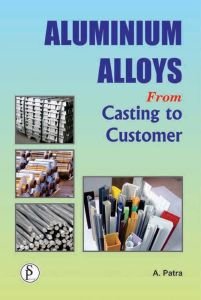
Contents: Preface. 1. Introduction. 2. Strengthening of aluminium alloys. 3. Fundamentals of rolling. 4. Processing fundamentals. 5. Aluminium rolled products. 6. Common encountered defects of aluminium - rolled products and overall remedial actions. References. Subject index.
Aluminium possesses high strength, low density and ability to resist corrosion due to the phenomenon of passivation. Structural components made from aluminum and its alloys are vital to the aerospace industry and are important in other areas of transportation and structural materials. In order to improve upon the properties and hence utilization, much effort has been directed towards the development of Aluminium alloys. Aluminum alloys are alloys in which Aluminium (Al) is the predominant metal. The typical alloying elements are copper, magnesium, manganese, silicon, and zinc. Aluminium alloys are widely used in engineering structures and components where light weight or corrosion resistance (marine environment) is required. In the context of current scenario Aluminium alloys exhibits a wide spectrum of applications as finstock for Air conditioning system, pressure-cooker products, foils for packaging, closures for bottle caps and cans, Lithographic coil for printing purpose, shell for holding bullets. The book provides an interesting comprehensive guidance of different products of Aluminium alloys, overview on industrial fabrication methods, critical issues associated with end application and fabrication. The book is divided into six chapters. Chapter 1 and 2 is dedicated to the general introduction of Al based alloys and different mechanism of strengthening. Chapter 3 to 5 is based on the general principle of rolling along with fabrication of Aluminium rolled products and applications. As Aluminium alloys has multidimensional applications and each end products has specific quality requirement during fabrication which is discussed in depth in Chapter 5. Several anomalies during processing of Aluminium rolled products and the possible remedies are described in Chapter 6. References are provided at the end of each chapter. I hope that the book will serve as a useful reference in future for the readers.
