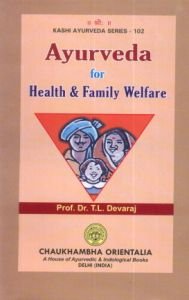
Ayurveda for Health and Family Welfare
Contents: Part A. 1. Derivation and definition of word Swasthavritta. 2. Historical background of Swasthavritta. 3. Ideal physically perfect human body. 4. Daily duties and health. 5. Sleep and health. 6. Sex and health. 7. Seasonal conduct and health. 8. Doshas and health. 9. Spiritual and mental treatment in Swasthavritta. 10. Satvadi Gunas and health. 11. Mental health. 12. Direct and indirect measures to maintain health. 13. Unhealthiness and defective constitution. 14. Ojas and health. 15. Food and health. 16. Swasthavritta in women. 17. Swasthavritta of infants, children and old people. 18. General rules of right conduct of men, women, children and infant. 19. Occupational hygiene. 20. Importance of public health. 21. Military health and its maintenance. 21. Preventive measures to preserve health. Part B. 1. Janapadadwamsa (Epidemic and Endemic Diseases). 2. Desh (Country). 3. Ahara (Food). 4. Udaka (Water). 5. Vayu (Air). Part C. 1. Definition of family and its importance. 2. Menstrual cycle (Ruthukala). 3. Characteristics of pure and impure semen and ovum. 4. The production of the (Grabha) Foetus. 5. Growth development and nutrition of the Foetus. 6. Regimen during pregnancy. 7. Diseases due to pregnancy and their treatment. 8. Signs and symptoms of impending abortion, miscarriage and their management. 9. Foetal death. 10. Management of Foetal normal presentations. 11. Pot-partum car of the mother. 12. Care of the new born. 13. Diseases of children. 14. Balagrahas and their management. 15. Diet for children and adults. 16. Yonivyapats and their management. 17. Sterility. 18. Impotency. Part D. 1. The family planning in Ayurvedic. 2. Text drugs and their names in different languages. Bibliography. Names of books of the author.
The book Ayurveda for Health and Family Welfare is the first book in the history of Ayurveda. There is a vivid description about maintenance of health through Swastha Vritta, Dinacharya, Ritucharya, Brhamacharya, sleep, exercise and practice of Yoga. This book consists of 4 parts first part A deals with Swasthavritta which is essential to people in this so called civilized world to get their bodily and mentally ailments cured or atleast prevented.
Part B: Deals with epidemic and endemic diseases and ways and means of their control.
Part C: Details about family from birth to menopause for women and to gents from child to old age.
Part D: Exhaustively deals with family planning in ancient India more than five thousands years ago, the nirodh like sheaths were used and vasectomy and operations are also advised. The spermicidal drugs are also used for contraception.
This books is written by an Ayurveda professor of repute will be useful to Health and Family Welfare department as well as Ayush Department.
The book Ayurveda for Health and Family Welfare is the first book in the history of Ayurveda. There is a vivid description about maintenance of health through Swastha Vritta, Dinacharya, Ritucharya, Brhamacharya, sleep, exercise and practice of Yoga. This book consists of 4 parts first part A deals with Swasthavritta which is essential to people in this so called civilized world to get their bodily and mentally ailments cured or atleast prevented.
Part B: Deals with epidemic and endemic diseases and ways and means of their control.
Part C: Details about family from birth to menopause for women and to gents from child to old age.
Part D: Exhaustively deals with family planning in ancient India more than five thousands years ago, the nirodh like sheaths were used and vasectomy and operations are also advised. The spermicidal drugs are also used for contraception.
This books is written by an Ayurveda professor of repute will be useful to Health and Family Welfare department as well as Ayush Department.
