Bertrand Russell And The Passionate Skeptic
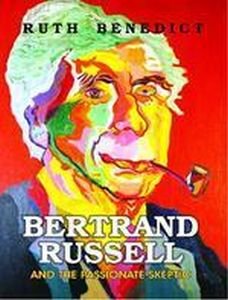
Contents: Preface. 1. The boy in the garden. 2. He was always talking. 3. Berlin and Marxism. 4. The work of genius. 5. Mathematics and philosophy. 6. The theory of descriptions. 7. Reviews and politics. 8. A quiet life. 9. Cambridge and Harvard. 10. First world war. 11. The prisoner of Brixton. 12. The analysis of mind. 13. A visit to Bolshevism. 14. China is delightful. 15. Chelsea candidate and American lecturer. 16. Russell and relativity. 17. Beacon Hill School. 18. Marriage and morals. 19. The indefatigable author. 20. Pacifism and the second world war. 21. An outcast in America. 22. The rebel becomes revered. 23. Australia Felix. 24. The unfinished philosophy. 25. While still at work. 26. The young octogenarian. Index.
Bertrand Russell had one of the most widely varied and persistently influential intellects of the 20th century. During most of his active life, a span of three generations, Russell had at any time more than 40 books in print ranging over philosophy, mathematics, science, ethics, sociology, education, history, religion, politics, and polemic. The extent of his influence resulted partly from his amazing efficiency in applying his intellect (he normally wrote at the rate of 3,000 largely unaltered words a day) and partly from the deep humanitarian feeling that was the mainspring of his actions. This feeling expressed itself consistently at the frontier of social change through what he himself would have called a liberal anarchistic, left-wing, and skeptical atheist temperament.
This is a Biographical study by Alan Wood who was a friend and philosophical disciple of Russell, and was completed with Russell\'s cooperation. (jacket)
Bertrand Russell had one of the most widely varied and persistently influential intellects of the 20th century. During most of his active life, a span of three generations, Russell had at any time more than 40 books in print ranging over philosophy, mathematics, science, ethics, sociology, education, history, religion, politics, and polemic. The extent of his influence resulted partly from his amazing efficiency in applying his intellect (he normally wrote at the rate of 3,000 largely unaltered words a day) and partly from the deep humanitarian feeling that was the mainspring of his actions. This feeling expressed itself consistently at the frontier of social change through what he himself would have called a liberal anarchistic, left-wing, and skeptical atheist temperament.
This is a Biographical study by Alan Wood who was a friend and philosophical disciple of Russell, and was completed with Russell\'s cooperation. (jacket)
