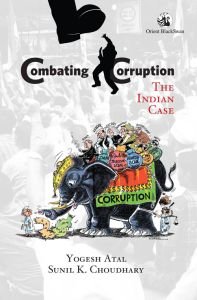
Combating Corruption: The Indian Case
Contents: Introduction: Articulating the Concern about Corruption. I. Corruption: A Social Science Perspective: 1. Conceptualising Corruption. 2. Causes of Corruption. 3. Stages and Spheres of Corruption. II. The Corruption Syndrome in India: 4. Pious Platitudes and Perfunctory Pledges. 5. Preventing Corruption: Indian Initiatives. 6. The Rising Graph of Corruption in India. III. The Expression of Public Anger, 2011–12: 7. The Three Crusaders: Jayaprakash Narayan, Baba Ramdev and Anna Hazare. 8. Ramdev’s First Swabhiman Rally at Ramlila Maidan, February 2011. 9. Anna’s Fast at Jantar Mantar, April 2011. 10. Ramdev’s Second Rally at Ramlila Maidan, June 2011. 11. Anna’s Agitation at Ramlila Maidan, August 2011. 12. Post-August 2011 Events Leading to the Mumbai Fiasco. 13. Anna’s Rally at Jantar Mantar, July–August 2012. 14. Ramdev’s Fast at Ramlila Maidan, August 2012. Conclusion: Tying the Threads Together.
With the exposure of major scams like 2G spectrum, Commonwealth Games and Adarsh, public anger against corruption boiled over as witnessed in the massive protests of 2011–12.
Combating Corruption: The Indian Case provides a perspective for viewing the increasing levels of corruption in the higher echelons of politics and bureaucracy in post-Independence India, and the limits of popular struggles and legislative/administrative measures to combat it. Looking at the phenomenon as ‘deviance’ from norms and a systemic dysfunctionality, the authors argue that it can be resisted by effective strategies of mass mobilisation under charismatic leaders. Focusing on peoples’ participation, it traces the emergence of anti-corruption movements to the JP Movement of the 1970s, and culminates with the protests led by Anna Hazare and Baba Ramdev and the rise of the Arvind Kejriwal-led Aam Aadmi Party.
The book fills a major lacuna in our sociological understanding of corruption—as exemplified by cases of grand embezzlement—and the popular opposition to it. Identifying the traditional sources of corruption, the authors show how the problem manifests itself in the social, economic and political contexts peculiar to India. And in doing so, they underline the crucial role of state institutions and a vigilant civil society in tackling a problem that afflicts almost all, and not only the developing, societies.
As ‘instant history’, Combating Corruption is an account of an unprecedented phase of mass protests in India. A must-read for political analysts, sociologists, journalists and general readers alike, it is indispensable for understanding contemporary India.
