Daksina Kosala: A Rich Centre of Early Saivism
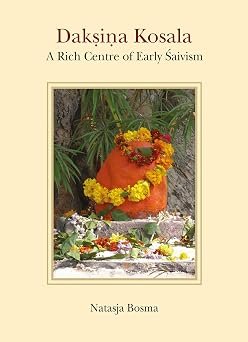
This book explores the early development of Śaivism in ancient Dakṣiṇa Kosala, a region corresponding broadly to present-day Chhattisgarh and parts of western Odisha (formerly Orissa). In the late sixth and early seventh centuries, this region came under the rule of the Pāṇḍava king Śivagupta, also known as Bālārjuna, who governed from Śrīpura (modern Sirpur) and is remembered as a distinguished patron of religion. Epigraphical evidence, supported by archaeological remains, indicates that by the time of his long reign, Dakṣiṇa Kosala had already emerged as a major centre of early Śaivism.
Against this background, the book examines the conditions that fostered the rise and consolidation of Śaivism in this region. It also considers whether the Skandapurāṇa, an important and roughly contemporaneous religious text, played a role in this process. In addressing these questions, the study sheds light not only on the religious landscape of Dakṣiṇa Kosala, but also on the complex interplay of political power, social formations, economic factors, and geography in shaping early medieval religious traditions.
