Dialogue on Tipaimukh Dam
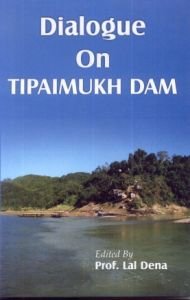
Contents: Foreword. Prolegomena. 1. Tipaimukh: past, present and future/L. Keivom. 2. Oh! Tipaimukh: my personal reminiscences/K. Prongo. 3. How far the Tipaimukh HE project would be beneficial to Manipur/Arun Kumar. 4. Tipaimukh Dam: a boon or a curse?/Thangsawihmang Sawngate. 5. Tipaimukh Dam: from a Rustic view of a soldier/R.S. Jassal. 6. Tipaimukh Dam and the Forgotten issues/David Buhril. 7. Open debate on Tipaimukh Dam/K.A. Singh. 8. Dam as a metaphor of development/Rajive Singh. 9. Protection of indigenous land rights: need for touching the emotional chords of the Hmars in Tipaimukh/Robert Lalmalsawm Sungte. 10. Indigenous knowledge system: identity, freedom and Tipaimukh Dam/Emmanuel Zarzosang. 11. Indigenous perception of land: the case of the Tipaimukh areas/Zothanchhingi Khiangte. 12. Tipaimukh Dam and the Zelingrong Nagas: Hopes and fear/Chungmeijai Mathew Kamei. 13. Tipaimukh Dama nd the Hmars: Hopes and fear/Joseph Joute. 14. Responses to the Tipaimukh Dam: an assessment/O. Ranjit Singh and Amal Sanasam. 15. Tipaimukh Dam and T. Khuma’s verdant hill/Lalruoivel Pangamte. 16. Tipaimukh Dam: Boon or Doom/C. Doungel. 17. Towards the protection of Indigenous land rights: the case of Tipaimukh Areas/Ginneihching. 18. Joint ownership in the creation of development assets with reference to Tipaimukh Dam/Lhingneilam Lupheng. 19. The issues of displacement and rehabilitation in the construction of Tipaimukh Dam: an analysis/David K. Zote. 20. Hmar Inpui’s response to the Tipaimukh Dam: a discussion/Lalkhawlien Pulamte. Index.
The book has highlighted both the positive and the negative aspects of the controversial Tipaimukh dam. Majority of the contributors are the local intellectuals from Tipaimukh area, who have freely expressed their opinions on the dam. It is an essential reading for concerned ministries under the governments in North East India including the implementing agencies, NGOs and scholars seeking an historical insight into the dam and its ecological environmental, socio economic and political impacts.
