Empowerment of Neo-Literates
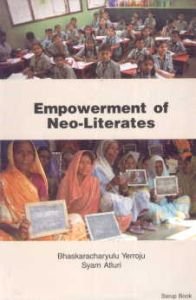
Contents: Preface. I. Literacy promotion programme: 1. Continuing education for empowerment neo-literates/P. Adinarayana Reddy and E. Mahadeva Reddy. 2. Human resource development through continuing education programme/Y. Bhaskaracharyulu, K. Ananda Rao, and Y. Nirmala. 3. Empowerment of women through continuing education programme/Uma Mohan, D. Uma Devi and G. Vidyasagar Reddy. 4. Adult education - an instrument of poverty alleviation/K. Sudha Rani, R.B. Sathyavthi and T. Ananda. 5. Evolving strategies for the human resource development among the neo-literates/J. Padma Kumari and N.V. Swamy Naidu. 6. Human resource development in continuing education/Saravanan and R. Venktaram. 7. Human resource development through literacy movement/S. Lakshmi Prasad and T. Sharon Raju. 8. Evolving strategies for human resource development among neo-literates through physical education - status and future directions/R.V.L.N. Ratnakara Rao and V. Krishna Murthy. 9. The role of adult and continuing education in the human resource development: the changing scenario/M. Prabhakara Rao. 10. Empowerment through promotion of health literacy - critical considerations/Santosh Kumar Mishra. 11. Role of adult education departments in human resource development in 21st century/V. Jagadeeswari and Y. Nirmala. 12. Empowering the neo-literates: need of the hour/Y. Bhaskaracharyulu and M. Appala Raju. 13. Human resource development: issues and concerns of neo-literates/M.V.S.S. Prakasa Rao, P.Ch Lakshminarayana and H. Subharamanyam. II. Education for all: 14. Development of resources for neo-literates/J. Anuradha. 15. Female neo-literate in tribal community in Jharkhand: Challenges and solutions/Kameshwar Prasad Singh and Ashok Oraon. 16. Development of entrepreneurship among neo-literates/T. Kumaraswamy, E. Bhuvaneswara Chowdary and G.V. Sagar Reddy. 17. Human resource development - through lifelong learning/G.V.R.R. Prasad. 18. Equal education opportunities - capacity and life skills building for Schedule caste and Schedule Tribe students in the higher education system/Rajesh. III. Vocational training programmes: 19. Vocational training and skill enhancement and higher education system/Rajesh. 20. Training and development - harnessing the skills/B.L. Raina. 21. Development of vocational and technical education - experiences from selected countries/S.C. Jhansi. 22. In-service programmes for the qualitative improvement of education - a review/T. Nirmala Jyothi. IV. Awareness programmes: 23. An in-depth study of child labour in Shillong City/E. Jyrwa. 24. Aids awareness and media: a study of puppetry and documentary film/K. John Babu. 25. Welfare schemes for the Scheduled Caste: importance of awareness programs/P. Easwara Rao. V. Sustainable education: 26. Development of soft skills by the teacher educators/T.J. Mouni Suvarna Raju, S. Nageswara Rao and T. Sharon Raju. 27. Social capital and developmental processes/K. Visweswara Rao and K. Ananda Rao. 28. Why it is difficult to impart sustainable competencies in science learners?/S.V. Lakshmana Rao. 29. Importance of soft skills in the present scenario of higher education/Rajani Priya. VI. Value based education: 30. Promotion of values towards human resource development through value/D. Silambu Selvi and A. Jahitha Begum. 31.Value based education/B. Praveena Devi. 32. Education in Universal human values innovation in value based education/Bhalba Vibhute. Index.
"The prosperity and pace of the development of a country lies in its human resources Human Resource Development is a process of developing and shaping the required competencies among selected groups with a view to invest their services in the economy. Recognizing the role of human resources in economic development, the country has taken a number of measures at various levels to promote human resources through specific and general initiatives.
The merit of this volume lies in a contemporary relevance of the subject and a vast variety of topics covered. Distinguished academicians and scholars from all over India have contributed their wisdom in a logically arranged sequence and explained the theoretical and practical aspects for the use of future operations in the Ault and continuing education in continuing education programmes.
We believe that this book will be immensely significant and useful for the researchers and academicians and it will be helpful to the department personnel for their professional growth. Hope that this volume would prove immensely beneficial."
