Gender Mainstreaming Through Technology Empowerment
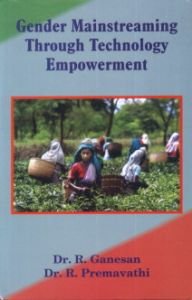
Contents: Preface. 1. Importance of Gender and gender concepts for technology empowerment/M. Asokhan. 2. Gender analysis and issues in agriculture/M.K. Kalarani. 3. Participatory approaches for gender mainstreaming in agriculture/V.E. Sabarathinam. 4. Gender and decision making/V. Ravichandran. 5. Rural energy technologies towards the empowerment of rural women/S. Kamaraj. 6. Leadership development among rural women/J. Venkitapirabhu and R. Premarathi. 7. Women empowerment of through market intelligence/N. Ajjan. 8. Integrated farming system approaches for women empowerment/C. Jayanthi and V.S. Mynavathi. 9. Women empowerment through technology intervention vermin composting/M. Maheswari. 10. Mushroom Technology a key enterprise for women empowerment/V. Prakasam. 11. Drudgery reduction technologies for empowerment of women in agriculture and allied sectors/V.M. Duraisamy. 12. Activities of Women study centre at Avinashilingam University/K. Thangamani. 13. Mainstreaming women as successful entrepreneurs/R. Ganesan. 14. Women empowerment through front line extension centres/P. Kalaiselvan and N. Sriram. 15. Law and legal rights to empower women/S.V. Devanathan. 16. Women participation in Self-Help group (SHGs) institutions across micro watersheds/D. Ssuresh Kumar. 17. Development of women in five year plans/Kamalavani. 18. Role of NGOs in socio-economic empowerment of people/S.R. Subramanian. 19. Gender Responsive budgeting/N. Sriram. 20. Enebling farm women through ICT/N. Anandaraja. 21. Empowering women through community radio/R. Vijayaraghavan. Index.
Gender issues in agriculture have become importance areas of discussion and debate among researchers, development experts and policy makers as well. To be precise, it is the prevailing inequities between men and women that are causes of concern for all of us. Whether it is productivity of worker or access to productive resources and services or access to technologies and information or remunerative opportunities and benefits, gender differences are quire discernible. It is apprehended that such inequalities, if allowed to persist and perpetuate, would push a large section of workers particularly women into a vicious circle of poverty and poor health. Certainly, this would not augur well for Indian agriculture that is waiting for a second green revolution to usher. Considering the fact that women are an important and integral segment of agricultural work force. Gender mainstreaming in agriculture has been accepted as an instrument and change process. What is required is conscious and concerted efforts to push forward the process that would promote technologies, policies and institutions of the realistic assessment of gender roles and needs. In such an endeavour, scientists and extension specialists have larger roles to play. There exists a need to equip them with understanding on new knowledge, skill and tools to face the challenge.
In this context, a short course on gender mainstreaming through technology empowerment was organized at the department of agricultural extension and rural sociology, TNAU, Coimbatore to discuss on various issues related to tools and techniques of gender analysis, gender issues in agricultural research and development, participatory approaches for gender mainstreaming, appropriate technologies for women empowerment and alike.
The book is therefore, likely to be useful to researchers, policy makers, decision makers, administrators, extension personnel, planners and development officials of agriculture and allied sectors and students of social sciences. (jacket)
