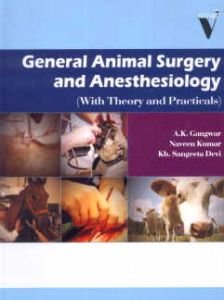
General Animal Surgery and Anesthesiology (With Theory and Practicals)
Contents: Foreword. Preface. Prologue. I. Theory: A. General surgery: 1. Historical aspects and introduction. 2. Pre-operative, intra-operative and post-operative consideration of a surgical patient. 3. Sterilization. 4. Suture materials and suture patterns. 5. Fluid therapy. 6. Shock. 7. Fracture. 8. Wound. 9. Burn. 10. Hernia (Dr. A.K. Sharma). 11. Inflammation. 12. Sprain, strain and bursitis. 13. Arthritis. 14. Luxation subluxation and dislocation. 15. Diseases of arteries and veins. B. Anesthesiology: 16. Historical aspects and general considerations. 17. Preanesthetic agents. 18. General anesthesia. 19. Injectable anesthetics and their combinations used for general Anesthesia (Dr. Adarsh Kumar). 20. Inhalant anesthetics. 21. Anesthetic emergencies and their management. 22. Endotrachael intubation (Adarsh Kumar). 23. Muscle relaxants. 24. Local anesthetics. 25. Local anesthetics techniques. 26. Acupuncture. II. Exercises: Objective: 1. General consideration for set up of an operation theatre (OT). 2. Preparation of general surgical pack. 3. Familiarization with udder and teat instruments. 4. Familiarization with orthopedic instruments. 5. Familiarization with ophthalmic instruments. 6. Familiarization with Hoof instruments. 7. Familiarization with Dental instruments. 8. To study different types of catheters and their applications. 9. Restraining and positioning of animals for surgical interventions. 10. Familiarization with different apparatuses used for general anesthesia. 11. Preparation, calculation and induction of general anesthesia. 12. Demonstration monitoring of general anesthesia and management of anesthetic emergencies. 13. Hemorrhage and hemostasis. 14. Bandages and slings. 15. Demonstration of monitoring of general anesthesia. 16. Anesthesia for laboratory and wild animals. 17. Restraining of animals. 18. Miscellaneous instruments.
"The book "General Animal Surgery and Anesthesiology" is Written as per the syllabus approved by VCI and has been arranged to provide a sequential knowledge of the said subject. The course content of this book is totally based as per the guidelines set up by the Veterinary Council of India. This book is prepared by consulting several standard textbooks and journals of related field. A number of illustrations and photographs have been incorporated at places to make the text more meaningful."
