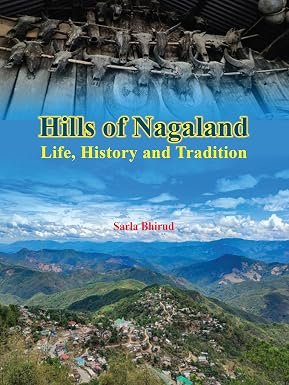
Hills of Nagaland: Life, History and Tradition
Contents: Preface. Part I: Introduction and Prehistory. 1. Introduction to Nagaland. 2. The spirit of Nagaland: Land, people and tradition. 3. Prehistory of Nagaland. 4. The stones of the Nagas and the prehistoric heritage of northeast India. 5. The neolithic and megalithic traditions. 6. Archaeological heritage of Tseminyu district, Nagaland. 7. Agriculture in Nagaland: From the late first millennium BC to the second Millennium AD: Archaeobotanical evidence. 8. The prehistoric archaeology and human ecology of Nagaland. Part II: Exploring Nagaland: Society and Culture. 1. Megalithic sites. 2. Kisama Village. 3. Jakhama and Kigwema villages: Historical and cultural landscape of southern Angami region. 4. Hidimba Dimapur. 5. Dzuko Valley, Nagaland. 6. Kohima: History, Geography and cultural significance. 7. A serene escape at Benreu village, Nagaland. 8. Discovering Khonoma. 9. Mount Pauna. 9. The people of Nagaland. 11. Aspects of Human Life-Village life. Conclusion. Glossary. Index.
Hills of Nagaland: Life, History, and Tradition presents an interdisciplinary study of the archaeology, history, geography, environment, and cultural traditions of Nagaland. Organized into two parts, the volume examines the region's prehistoric archaeology. Neolithic and megalithic traditions, human ecology, geological heritage, agriculture, the archaeology of Dimapur and the antiquity of the Kachari civilization, the historical context of World War II, the geography and forest cover of Nagaland, early scholarly writings, and indigenous perspectives on the archaeological record. It also documents the archaeological heritage of Tseminyu district and explores the relationship between landscape, material culture, and historical development.
The second part examines the historical and cultural landscapes of Nagaland through studies of megalithic sites, traditional architecture, village institutions, and the social organization of Naga communities. It includes discussions of Kisama, Jakhama, Kigwema, Kohima, Khonoma, Benreu, Dzüko Valley, Mount Pauna, Hidimba, Dimapur, the Dimasa (Kachari) Kingdom, the people of Nagaland, Mongkawng in 1572, mithun, and the cultural aspects of village life. By placing these themes within the broader historical and cultural context of Northeast India, the volume contributes to an understanding of the historical development, cultural diversity, and regional traditions that form an integral part of India's history and cultural heritage. It highlights how the histories and cultural practices of the Naga Hills enrich a wider understanding of the plurality, continuity, and diversity of the Indian subcontinent.
