ICTs for Agricultural Development Under Changing Climate
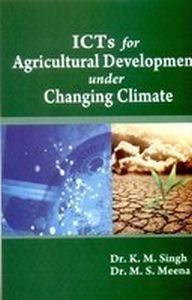
Information and Communication Technologies (ICT) in agriculture is an emerging domain evolving the innovative paradigm for reaching the unreached. The challenge is not simply to increase rural access at a national level, but to connect rural agricultural producers to markets through global information networks. Nowadays, ICT is becoming an important means for societal transformation and emerging rapidly in developing as well as developed countries. Rural development is expanding in new directions wher old ways of delivering important services to citizens are being challenged; and traditional societies are being transformed into knowledge societies across the world. As a broad tool for providing local farming communities with scientific knowledge, ICT heralds the formation of knowledge socities in the rural areas especially of developing world. Howerver, this can only be realized when knowledge and information are effectively harvested for overall agriculture and rural development. Climate change is a global problem with local impacts, thus information technology, jointly with communication sciences, can play a big role in blending different perspectives. As agriculture is likely to suffer the biggest impacts, sound adaptation processes are required to sustain agricultural production and food sysem as a whole. Therefore, any knowledge transfer should take into account farmers' point of view, with the aim of building in their knowledge and capitalize it.
The present book ICT for Agricultural Development in changing Climate attempts to support the managers of Agricultural Extension Organizations and Social Scientists especially in developing countries. Accordingly, 30 chapters on the main theme ICT for Agricultural Development in Changing Climate have been chosen and placed in 5 different parts namely:
Part: 1 ICT for Socio-Economic Upliftment and Women Empowerment
Part: 2 ICT for Scientific Agriculture
Part: 3 ICT for Soil and Water Management
Part: 4 ICT for Animal Husbandry and Fisheries and
Part: 5 ICT for Integrated Pest and Disease Management
The editors and the contributors are sincerely trust that this book will help the reads to polish up their Agricultural Extension System and approach to changing situation in which they work by learning from experiences. Further, it is also expected that the sharing experiences between nations and professionals may help to improve the transfer of agricultural innovations to eradicate the povery among farm families.
