Indian Agricultural Heritage: An Overview
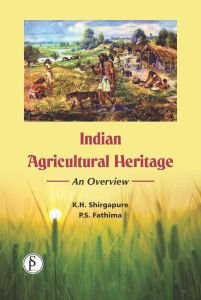
Contents: Preface. 1. Need and importance of agriculture heritage. 2. Plant production through indigenous technical knowledge (ITK). 3. Chronology of agricultural technology development in India. 4. Scope of agriculture in India. 5. Classification of crops. 6. Present status of Indian agriculture. 7. Indian Agriculture concern. 8. Future prospects of Indian agriculture. 9. National agricultural research system (NARS)/ setup of agriculture in India. 10. Origin of man and Paleolithic culture (Before 10000 B.C.). 11. Mesolithic period. 12. Neolithic culture of Eastern India. 13. The Neolithic agricultural revolution in Western Asia (7500 B.C.–6500 B.C). 14. Neolithic culture: Kashmir (Burzahom) 2375 B.C. 15. Neolithic culture of South India. 16. The Chalcolithic culture. 17. Harappan Culture. 18. Status of Farmer and Agriculture During Vedic Age (Aryan). 19. Status of Agriculture During Buddhist Periods. 20. Status of agriculture during the Satavahanas and Kushans: The Role of Brahmins in agriculture. 21. Status of agriculture and farmers: The Kingdoms of South India. 22. Agriculture During Kannauj Empire of Harshavardhana.23. Agriculture during Kingdoms of North and Western India: The Rajputs. 24. Climate resources of India. 25. Soil Resources of India. 26. Water resources of India. Subject Index.
Agriculture is an age-old practice. From 6500 B.C., with the cultivation of wheat and barley to present scientific cultivation, a lot of development occurred in it. Agricultural heritage deals with this agricultural development and its transfer from generation to generation. Problem of environment sustainability arises due to intensive chemical inputs used in agriculture. Study of agriculture heritage helps to know the science behind the ancient Indigenous Technical Knowledge’s (ITK’s), which was unknown at that time. Thereby, we can maintain the sustainability in agriculture by utilising these ITK’s. It is also essential to aware the new generation about development in agriculture. The present book is an effort in this direction in which the authors has attempted, how the development shall be done in agriculture and its transfer from generation to generation, comprising agriculture during Stone age, Iron age, Bronze age, Vedic age, Harappan culture, Buddhist period and during different ancient kingdom of India. Present book also emphasises on ITK’s in agriculture, soil, water and climatic resources of India, status, concerns and future prospects of Indian agriculture. I hope that this book will be useful for students and as reference book for teachers.
