India\'s Women Chief Ministers
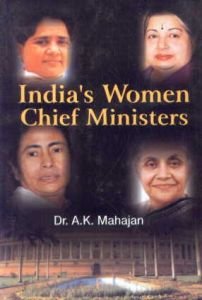
Contents: Preface. 1. Chief Minister: Election, Appointment and Position. 2. Women and Parliament. 3. Grassroots Democracy and Panchayati Raj of Women. 4. Governmental Efforts of Empowering Women. 5. Women’s Movement and the Issue of Representation. 6. Strategies and Governmental Interventions of Women. 7. Sucheta Kriplani. 8. Nandini Satpathy. 9. Shashikala Kakodkar, Syeda Anwara Taimur and Janaki Ramachandran. 10. J. Jayalalithaa. 11. Mayawati. 12. Rajinder Kaur Bhattal. 13. Rabri Devi. 14. Sushma Swaraj. 15. Sheila Dikshist. 16. Uma Bharti. 17. Vasundhara Raje. 18. Mamata Banerjee. Bibliography. Index.
A Chief Minister is the elected head of government of a state of India. The chief minister is the head of the state Cabinet, and the leader of the state Legislature. By the Constitution of India, the chief minister is appointed by the Governor of the state. The parliamentary system in India follows the Westminster system. Hence the chief ministers of the state are elected by the members of the legislature. With Mamta Banerjee and Jayalalithaa set to capture power in West Bengal and Tamil Nadu respectively, India could for the first time boast of four women Chief Ministers. Shiela Dikshit of Delhi has the distinction of the longest serving woman Chief Minister in post-independent India, has been serving for the past 12 years. BSP supreme Mayawati has single-handedly secured power in the largest state of Uttar Pradesh in 2007 elections and her victory at that time was seen as a defining moment in Indian politics.
