Law and Society : Random Thoughts
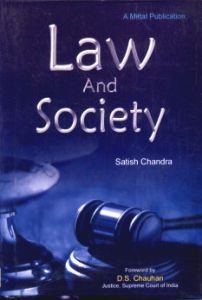
Contents: Foreword. Preface. 1. Contribution of law makers in social reconstruction. 2. Do we the people of India need parliamentary democracy? 3. A caveat on the constitutional crisis between the heads of the state and the government. 4. ‘Justification of pardon by the governor and helpless Supreme Court. 5. Human rights in India. 6. Modern weapons-industries and human rights. 7. Massacre of Tamils and law in Sri Lanka. 8. Endless air pollution and political economy in India. 9. ‘Muslim Women (Protection of Rights on Divorce) Bill 1986’ -- a critical appraisal. 10. Equality before law and Antulay’s case. 11. Legal education in India -- a contemporary perspective. 12. The problems of law teachers and law teaching. 13. Should the university come under the jurisdiction of the administrative tribunal -- a searching enquiry. Index.
There is, widespread feeling that the explosion of scientific knowledge and of its technological application which has taken place in recent decades has not been accompanied by an appropriately urgent, profound and continuous consideration of the implications thereof for human rights. It has been asserted that such a consideration has become the more urgent since new scientific discoveries now pass more rapidly than ever into practical application, and their implications for human rights are often unforeseen.
Science being itself a part of culture, the essential problem facing mankind in relation to scientific and technological progress, n the one hand, and the intellectual, spiritual, cultural and moral advancement of humanity, on the other, is to decide on the appropriate two way relationship which should exist between them. However, this relationship is not the same for all times or all places. An investigation of this relationship includes an examination f the impact, both beneficial and harmful, of recent scientific and technological developments upon the rights laid down in the Universal Declaration of Human Rights. Such impact affects many such rights, either individually or in combination. The application of policy measures appropriate to he circumstances is an aspect of achieving the correct relationship between scientific and technological progress and the intellectual, spiritual, cultural and moral advancement of humanity.
Legal educational policies should aim at better understanding of science on the part of the general public and a better understanding of humanity and the needs of the society. No doubt that many and varied measures have been taken on the national level for the protection of human rights. Nevertheless there is a growing conviction that there is need for continuing assessment on the national level in order to assess possible side-effects and long range effects of new innovations and to establish whether their advantages outweigh the discernible disadvantages, and for control over innovations with harmful potentialities.
The above aspects along with others have been discussed in a suggestive manner in the present book. One may hoe that book will be useful to the readers.
There is, widespread feeling that the explosion of scientific knowledge and of its technological application which has taken place in recent decades has not been accompanied by an appropriately urgent, profound and continuous consideration of the implications thereof for human rights. It has been asserted that such a consideration has become the more urgent since new scientific discoveries now pass more rapidly than ever into practical application, and their implications for human rights are often unforeseen.
Science being itself a part of culture, the essential problem facing mankind in relation to scientific and technological progress, n the one hand, and the intellectual, spiritual, cultural and moral advancement of humanity, on the other, is to decide on the appropriate two way relationship which should exist between them. However, this relationship is not the same for all times or all places. An investigation of this relationship includes an examination f the impact, both beneficial and harmful, of recent scientific and technological developments upon the rights laid down in the Universal Declaration of Human Rights. Such impact affects many such rights, either individually or in combination. The application of policy measures appropriate to he circumstances is an aspect of achieving the correct relationship between scientific and technological progress and the intellectual, spiritual, cultural and moral advancement of humanity.
Legal educational policies should aim at better understanding of science on the part of the general public and a better understanding of humanity and the needs of the society. No doubt that many and varied measures have been taken on the national level for the protection of human rights. Nevertheless there is a growing conviction that there is need for continuing assessment on the national level in order to assess possible side-effects and long range effects of new innovations and to establish whether their advantages outweigh the discernible disadvantages, and for control over innovations with harmful potentialities.
The above aspects along with others have been discussed in a suggestive manner in the present book. One may hoe that book will be useful to the readers.
