Law of Limitation
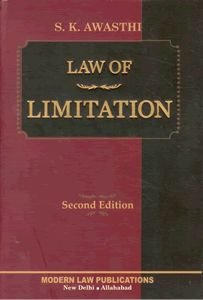
From the Preface: This new edition have been streamlined with the plethora of latest decisions of Supreme Court and of the High Courts up-to-date retaining all the exhaustive features of previous edition, completely recast, thoroughly revised and even rewritten at places, so as to make it more understandable.
In the Law of Limitation, there are generally three distinct concepts, namely, prescription, acquisition and barring of judicial remedies. The Act of 1963 deals with prescription, among other matters. It is well known that a law which prescribes a period of prescription extinguishes the title to the property at the end of a specified period rather than merely barring the judicial remedy.
At the expiry of the periods mentioned in the Schedule of the Act, the judicial remedy gets barred while the rights still remains. However, right cannot be enforced in a court of law after the expiry of the period. In case, the prescribed period for any suit, appeal of application expires on a day when the court is closed, the suit, appeal or application may be instituted on the day when the court reopens. This is based on the principle actus curiae neminem gravabit, which means that an act of court shall not prejudice any one. The court can condone the delay, if satisfied that it causes were beyond the control of the plaintiff too.
