Make in India : A Long Felt of the Indian Economy
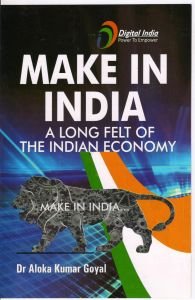
Contents: Preface. 1. Introduction. 2. Modis Mega make in India. 3. Economics of make in India. 4. Make in India: a critical examination of an economic strategy. 5. Make in India: a positive impact on manufacturing sector. 6. Make in India: global initiative. 7. Modis economic vision and make in India. 8. Make in India vs. make in China. 9. Foreign investment policy and make in India. 10. Swachh Bharat: Abhiyan and civilization. 11. Gandhi’s Swadeshi: the economics of permanence. 12. Digital India. Bibliography. Index.
Make in India is an international marketing campaigning slogan coined by the Prime Minister of India, Narendra Modi on 25 September 2014 to attract businesses from around the world to invest and manufacture in India. The ‘Make in India’ also attempts to enforce the inflow of FDI in the country and improve services by partial privatization of loss-making government firms. The campaign is completely under control of the Central Government of India. The launch of the ‘Make in India campaign by India’s Prime Minister, Narendra Modi, is a welcome move aimed at making India a more attractive investment destination, according to experts from Nexia International, a top 10 network of Independent accounting, tax and consulting firms. Invest India is the official Investment Promotion and Facilitation Agency of the Government of India, mandated to facilitate investments into India. It is envisaged to be the first point of reference for potential investors. Our team of domain and functional experts provide sector and state-specific inputs, and hand-holding support to investors through the entire investment cycle, from pre-investment decision making to after care. Swachh Bharat Campaign : The Abhiyan was launched by Prime Minister Narendra Modi on 2nd of October, 2014 at Rajghat, New Delhi with an aim to make India clean. Aim is to provide sanitation facilities to every family, including toilets, solid and liquid waste disposal systems, village cleanliness, and safe and adequate drinking water supply by 2nd October, 2019.
