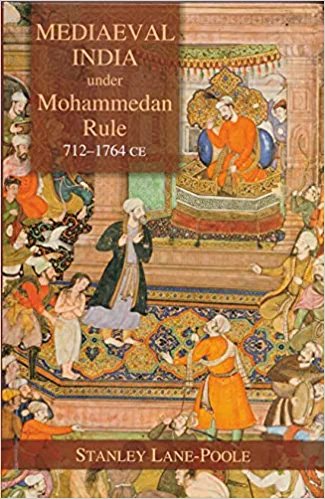
Mediaeval India under Mohammedan Rule (712-1764 CE)
Contents: Book I: The Invasions, 712-1206. 1. Introduction — The Arabs in Sind, 712. 2. The Idol- Breakers — Mahmud of Ghazni, 997-1030. 3. The Men of the Mountain — ghazni and ghor, 1030-1206. Book II: The Kingdom of Delhi, 1206-1526. 4. The slave king — The Turks in Delhi, 1206- 1290. 5. First Deccan conquests — ALA-AD-DIN KHALJI, 1290-1321. 6. A man of Ideas — Mohammad Taghlak, 1321-1388. 7. Disintegration — Provincial Dynasties, 1388-1451. Book III: The Moghul Empire, 1526-1764. 8. The coming of the Moghuls — The Emperor Babar, 1451-1530. 9. The EBB of the tide — Humayun, 1530-1556. 10. The United Empire — Akbar, 1556-1605. 11. Akbar’s Reforms — The Divine Faith, 1566-1605. 12. The Great Moghul — And European Travellers, 1605-1627. 13. Shah-Jahan — The Magnificent, 1628-1658. 14. The Puritan Emperor — Aurangzib, 1659-1680. 15. The Ruin of Aurangzib — The Maratha war, 1680-1707. 16. The fall of the Moghul empire — The Hindu revival, 1707-1765.Mohammedan Dynasties. Index.
The immemorial systems, rules and customs of Ancient India were invaded, subdued and modified by a succession of foreign conquerors who imposed new rules and introduced an exotic creed, strange languages and a foreign art. Their invasion started with the raid of the Muslim Arabs in Sind and with the arrival of the Turks under Mahmud the Iconoclast at the beginning of the eleventh century, India entered upon her Middle Age. This volume talks about the Indian history of over a 1,000 years, from 712-1764 with the raid of the Arabs in the Sind to the decline of the Moghul empire, featuring the Turks, Persians and Afghans (Moghuls) and specifies that the age-old Indian life outlived the shock of the new ideas, religion and culture that were imposed on India’s polity. India never assimilated the foreigners or their ideas. Barring Akbar the Great, that too at a minuscule level, no one could make much influence on them. Therefore, these foreigners remained essentially as an army of occupation among a hostile or repellent population, making the history of the Mohammedan Period more of a chronicle of kings, courts and conquest than of organic or national growth, stimulating and instructive.
