Millets: The Magic Nutri Cereals
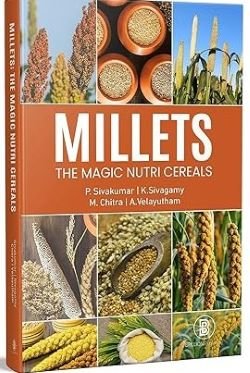
Contents: 1. Millets: A Food for Nutritional Security in India. 2. Harnessing the Diversity in Millets for Climate Resilience and Sustainability. 3. Influence of Legumes in Millets-Based Cropping System as a Sustainable Income for Millet Growing Farmers in Northern Tamil Nadu. 4. Millet Based Agroforestry Systems for Climate Resilience. 5. Physiological Adaptation of Millets to Drought Stress Tolerance. 6. Salicylic Acid and its Function in Small Millets Immunity. 7. Improved Productivity and Quality Associated with Nutrients and Growth Regulators Application in Small Millets. 8. Finger Millet Banana Malt Beverage Mix. 9. Genetic Engineering Approaches for Pearl, Finger, and Foxtail Millets Improvement-An Overview. 10. Economic Analysis of Minor Millets – An Empirical Evidence from Tamil Nadu Irrigated Agriculture Modernization Project. 11. Millets - Nutri Cereals for Health Benefits. 12. Technological Advancement in Millet Industry. 13. Insect Pests of Millets and Host Plant Resistance in Integrated Pest Management- A Review.
Millets are termed as “Nutri-cereals” or “Dryland cereals and are often cultivated in challenging environmental conditions characterized by drought, high temperature, and low fertility soil. The potential to improve food and nutritional security in many parts of the world, millets serve as a nutri food. Millet, in particular, is a nutritionally-rich crop that is rich in niacin and other essential nutrients. However, to fully realize the potential of millets in improving food and nutritional security, it is important to address the challenges and opportunities in promoting millet cultivation and consumption
Features:
Diversity in Millets for Climate Resilience and Sustainability
Adaptation of Millets to Drought Stress Tolerance
Genetic engineering approaches for millets improvement
