Punjab: Building the Land of the Five Rivers
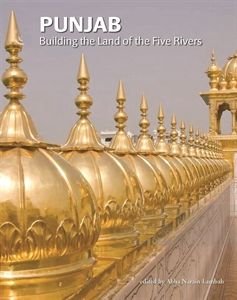
Contents: Preface. 1. Introduction/Abha Narain Lambah. 2. The Mughal and Sur Monuments of Punjab/Catherine B. Asher. 3. Sikh Architecture: Identity and Symbolism/Gurmeet S. Rai and Manpreet Kaur. 4. Mapping the Sufi Shrines of Punjab/Fauzia Qureshi and Subhash Parihar. 5. Forts of Punjab/Subhash Parihar. 6. Princely States of the Cis-Sutlej: Patiala, Jind, Nabha, Malerkotla, Faridkot/Abha Narain Lambah. 7. The Architectural Legacy of Maharaja Jagatjit Singh of Kapurthala/Jyoti Pandey Sharma. 8. Amritsar: Past Perfect, Future Imperfect/Janhwij Sharma. 9. The Cultural Legacy of Lahore/Nayyar Ali Dada. 10. The Princely Cuisine of Punjab: Food from the Royal Kitchens/Neha Prasada. Glossary. Index.
Through the centuries Punjab has been a historic rite of passage for invaders seeking control of the throne of Hindustan. In Mughal times, Punjab remained the vital highway linking the capitals of Agra and Delhi to Kashmir, Kabul and lands to the north. This region has also been traversed by people of different religions with Sufi saints and Sikh gurus profoundly influencing its cultural heritage. As the Mughal empire declined, the centre of power shifted and a new Sikh kingdom was founded by Maharaja Ranjit Singh in Lahore. The 19th century saw a parallel line of control by the British in the Cis-Sutlej states and in princely domains, where dynasties had already been established by local chieftains.
With its architecture enriched by the ideas and influences that each new wave brought, Punjab’s built inheritance encompasses a vast spectrum. This book examines these sites and the religious and cultural traditions that shaped them. Focusing both on small towns and major cities such as Lahore and Amritsar, it commemorates the 70th year of Independence and Partition.
