Quit India Movement : A Case Study of Meerut District
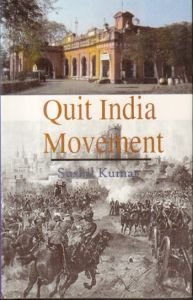
Contents: Preface. 1. Quit India movement: an overview. 2. Historical development of the quit India movement. 3. Outbreak of quit India movement in Meerut. 4. Role of students during the movement. 5. Role of the peasants during the movement. 6. Government attitude towards the movement. 7. Important nationalists of the movement. 8. Quit India movement :a sustainable development. Bibliography. Appendices.
The failure of Cripps Mission created for Gandhiji a moral crisis of a high order. Cripps shattered his appraisal and falsified his expectations. The British Government was not willing to part with power. On the other hand the Indian people were filled with distrust and hostility towards the British. On August 8, 1942 the Quit Indian resolution was passed at the Bombay session of the All India Congress Committee at Gowalia tank Bombay. Gandhiji told Indians to follow non-violent civil disobedience. He told the masses to act as an independent nation. By this movement Gandhiji anticipated to bring the British government to the negotiable table.
Although the congress had not made any actual preparations, the Government decided to strike immediately. As there was no definite organization and a complete lack of leadership violent riots and a complete lack of leadership, violent riots and assaults and sporadic disorders, such as cutting of telephone lines, damaging railway tracks, stations etc. Occurred on the large scale in different parts of India. It is certain that new generation had been motivated as it never had before to claim as a non negotiable goal, and every act of defiance and rebellion only reinforced the nationalist sentiment. (jacket)
