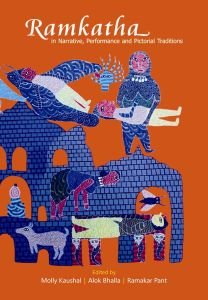
Ramkatha in Narrative, Performance and Pictorial Traditions
Contents: Introduction/Molly Kaushal. Section I: Papers in English. I. Sacred Geography. 1. Archaeology of Ramkatha/B.M. Pande. 2. Sita worship: a social response to Ramkatha in the Garhwal Himalayas/D.P. Saklani. 3. Important locations (villages) and verbal narratives associated with princess Sita in the central hills of Sri Lanka/H.M.D.R. Herath. II. Narrative Traditions. 4. Theatre of khyŒna in Indian Tradition/Radhavallabh Tripathi. 5. Ramkatha alive in performance/Paula Richman. 6. Living Ramayanas of the Adivasis of Gujarat: a study/Nila Shah. 7. Rama legend in Assam: tangible and intangible manifestation/A.K. Das. 8. The Ramayana tradition in Manipur/R.K. Jhalajit Singh. 9. Elements of the Ramayana among the Khasis and the Jaintias/Sylvanus Lamare. 10. Retelling of Rama stories in Karnataka/H.S. Shivaprakash. 11. Ramayana in Southeast Asian traditional theatre performances: adaptation and localization/Ghulam-Sarwar Yousof. III. Performance Traditions. 12. Ramkatha in the Yakshagana tradition/P. Bilimale. 13. Ramkatha in oral narratives and folk performance of Orissa/Mahendra Kumar Mishra. 14. Ramkatha in Performance in Garhwal Himalaya/D.R. Purohit and Roma Purohit. 15. Ramayana in Balinese performance/I. Nyoman Sedana. 16. The Reamker revisited: Akaeng Khameaso in Sophiline Cheam Shapiro’s choreography/San Phalla. 17. Being Rama: performing Rama in the changing times/Urmimala Sarkar. IV. Pictorial Traditions. 18. In visible idiom: Transfigurements of the Ramayana in India/D. Venkat Rao. 19. Crisis in Ayodhya: A reading of one miniature painting from the Chamba Ramayana Folio/Alok Bhalla. 20. The Painter’s Ramayana: Sahibdin’s Paintings of Yuddha KŒÄÎa/Ratan Parimoo. 21. The Killing of Sindhu in the Painted Scrolls of Bengal/Mandakranta Bose. 22. Gond Ramayani: In Text and in Painting/Molly Kaushal. 23. Bringing Up Hanuman: Hanuman and the Changing Imagination of Childhood/Philip Lutgendorf. Section II: Papers in Hindi
Transmission, mobility, adaptation and concrete expression of the Rama theme among different communities and regions in India and outside is the finest example of the power of the ‘oral word’ that transcends all boundaries, be they geographic, temporal, social or literary. It provides for plurality, diversity and continuity of the tradition transcending the rigid boundaries of the text to flow in multiple streams and directions meeting with tributaries and rivulets along the way. In order to explore, understand and comprehend this living and vibrant Rama tradition in Indian culture, the Indira Gandhi National Centre for the Arts, in 2008, convened an international conference Ramkatha: Ankan, Manchan aur Vaachan under its ongoing project, Living Traditions of Ramkatha and Mahabharata. The present volume consists of select papers presented in this conference along with others that were specially invited from eminent scholars in the field.
The papers here range from textual to oral, performance and pictorial renderings of Rama theme both in traditional and contemporary contexts, covering a large geographic area and diverse communities. For example, Bhil Ram Sitama ni Varta, Kunkana Ramkatha, Gond Ramayani, Rama traditions among the Ramnamis of Chhattisgarh, Ramman of Garhwal, Bundeli Ramkatha, Mewati Ramkatha and Ramkatha traditions among the Khasis, to name a few. The volume also contains essays on traditional and modern presentations of Rama theme in Southeast Asia.
The volume is broadly organised under four themes: sacred geography, narrative, performance, and pictorial traditions. However, several of them overlap and flow into one another. The book is further divided into two sections: the first contains papers in English and the second in Hindi.
This book is a significant addition to the existing literature on Ramayana and Ramkatha traditions and of great value to scholars of Indian culture, folklorists, anthropologists and Indologists.
