Redesigning the World Trade Organization for the Twenty First Century
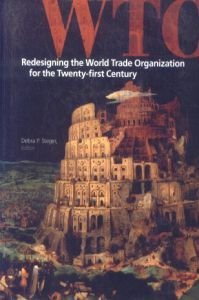
Contents: Foreword. I. Why institutional reform is necessary: 1. Why institutional reform of the WTO is necessary/Debra Steger. 2. Reinvigorating debate on WTO reform: the contours of a functional and normative approach to analyzing the WTO system/Carolyn Deere Birkbeck. II. Decision making in the WTO: 3. A two tier approach to WTO decision making/Thomas Cottier. 4. WTO decision-making: can we get a little help from the secretariat and the critical mass/Manfred Elsig. 5. Improvements to the WTO decision making process: lessons from the International monetary fund and the world bank/Alberto Alvarez Jimenez. III. Internal management of the WTO: 6. Internal management of the WTO: room from improvement/Debra Steger and Natalia Shpilkovskaya. IV. A transparency and domestic consultation: 7. From the periphery to the center? The evolving WTO jurisprudence on transparency and good governance/Padideh Ala’i. 8. Selective adaptation of WTO transparency norms and local practices in China and Japan/Ljiljana Biukovic. 9. Domestic politics and the search for new social purpose governance for the WTO: a proposal for a declaration on domestic consultation/Seema Sapra. 10. Enhancing business participation in trade policy making: lessons from China/Heng Wang. V. Public participation: 11. Options for public participation in the WTO: experience from regional trade agreements/Yves Bonzon. 12. Non-Governmental organizations and the WTO: limits to involvement/Peter Van Den Bossche. VI. Regional trade agreements and the WTO: 13. Accommodating developing countries in the WTO/Gerhard Erasmus. 14.Saving the WTO from the rise of irrelevance: the WTO dispute settlement mechanism as a Comon good for RTA disputes/Henry Gao and Chin Leng LIM. 15. Regional trade agreements and the WTO: the Gyrating gears of interdependence/Pablo Heidrich and Diana Tussie. Bibliography. Index.
Two high level commissions the Sutherland report in 2004 and the Warwick Commission report in 2007 addressed the future of the world trade organization and made proposals for incremental reform. This book goes further. It explains why institutional reform of the WTO is needed at this critical juncture in world history and provides innovative, practical proposals for modernizing the WTO to enable it to respond to the challenges of the twenty first century. Contributors focus on five critical areas: transparency, decision and rule making procedures, internal management structures, participation by non-governmental organizations and civil society and relationships with regional trade agreements.
