Rgvedic Legends
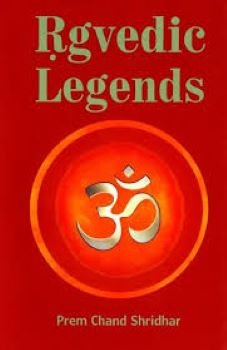
Vedic legends are embedded in an array of myths, symbols, images and in metaphorical languages. ‘Legend’ is very general term used to mean a traditional story, a story without proper historical foundation.
A myth is a class of stories, usually concerning Gods, semidivine heroes, etc. it touches the deepest desire of man, his fears, his hopes, his passion, his sentiments as it validates the social order.
The present study first presents a comparative view of the ancient and modern vedic scholars and then deals with the philosophy reflected in them with the help of mysticism and symbolism.
Chapterisation is based on the ten mandals of Rgveda. In all thirteen legends have been dealt with. These are Sarma and Panis, Sunahsepa legend, Lopamudra-Agastya, Grtsamada and Indra, Vasistha and Visvamitra, Vamadeva, Birth of Agni, Vishnu’s Three Strides, King Sudas, Atreyi Apata, The Descent of Soma, Urvasi and Pururavas, Yama-Yami.
The purpose and relevance of the present study lies in understanding the philosophical outlook and meanings these legends carry in their right perspective. Even otherwise, the medium of legend to communicate religious and even philosophical ideas has been found fruitful through the ages.
The sociological aspect of the legends is as important as their religious aspect. The philosophical ideas are reflected in the successive stages of our culture and civilization.
The third aspect of the legend is dialectics. Through the stores of the lives of great men and the teachings of the sages and seers retold in simple way and easy language, the legends together with the original ritualistic scriptures which themselves do not claim to be treated as the Vedas and in the main of which the Mantras are a part having their place in the rituals provided ethical instruction to the society-observes T.V. Kapali Sastry.
He also illucidates that the ancient tradition of a threefold interpretation has been thoroughly eclipsed, if not wiped out of the memory of the Indian Vedist for the last time and for good. Yaska refers to many classes of interpreters of the Vedas, according to whom spiritual knowledge, knowledge of the Gods and of sacrifice are the triple knowledge the threefold interpretation aims at.
