Scheduled Tribes of North East India and Development
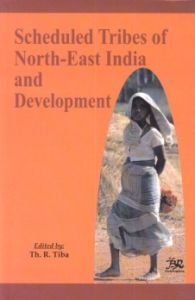
Contents: Preface. 1. Ethnohistory in Northeast India: in search of a framework/Sarah Hilaly. 2. Money supply in tribal areas for development/Tanmay Bhattacharjee. 3. Customary laws and tribal development in the Northeast/Walter Farnandez. 4. The post 9/11 anti-terrorism discourse in India and its implications for counter insurgency in the northeastern states/Joseph Maram. 5. Hmr peoples convention (HPC) movement (1986 1994): a critical observation/Paul Chonzik. 6. Immigration, land alienation and tribal assertion/Luke Daimary. 7. Ecology, Nagas and development/S.V. Babu. 8. The origin of the Chakmas and their settlement in Mizoram/T. Lalsangliana. 9. Anglo Naga relation and subsequent problem between Manipur, Cachar and the British India from 1832 1856/Anthony Kaba. 10. Dynamics of ethnicity: state, development and identities in N.E. India with special reference to the Zeliangrong Nagas/Tasongwi Newmai. 11. Promoting traditional cultural practices for tribal development in the North East/Kh. Kabi. 12. Searching for a common nomenclature: a study of the Chin-Kuki-Mizo people of Indo-Myanmar Border/T.T. Haokip. 13. Educational development and employment scenario of the Scheduled Tribe population of Barak Valley with special reference to Barmans/Pranay Jyoti Goswami. 14. Impact of schooling and communication on Scheduled Tribes of Assam/Geetika Bagchi. 15. Christianity and the socio educational transformation in the Hmar society/N.B. Biswas and Chandan Suklabaidya. 16. Is reproductive and child health programme addressing the needs of adolescent girls health? A study in Manipur/M. Tineshwori Devi. 17. Gender in relation to tribal culture with special reference to the Nagas in Manipur/Gina Shangkham
Scheduled Tribes are categories of communities who are the indigenous people of India. There are about such 645 tribal communities in India comprising of 12% of the total population. In North East India there are about 145 tribal groups of which 78 are large and the rest small comprising 22.81% of northeasts population. But these huge components of population constitute the marginal section of Indias population. They are the weakest sections of Indias Population from social, economic as well as educational angles and constitute the matrix of Indias poverty. Despite tremendous growth of Indias economy in recent times this section remains underdeveloped. This collection of seventeen papers thus analyses the problems that the scheduled tribes of this part of the country face as one of the least developed areas.
The contributors also deliberate to generate debates to the questions of development vis a vis scheduled tribes of North East India as they analyze the government programmes policies, tribal movements, ecology and development, gender, tribal culture language and ethnicity, education and employment.
