South Indian Fanams
Contents: Introduction. 1. The Gold Fanams found in Maski Excavations. 2. Symbols Found on Gold Fanams Discovered in Maski Excavations and their Significance. 3. Who Issued Fanams for the first Time in the Country? 4. Fanam Hoards in the State Museum at Hyderabad. 5. Fanams with (a) Legends (b) Animal Symbols and (c) Miscellaneous: Unknown Fanams. Epilogue. References.
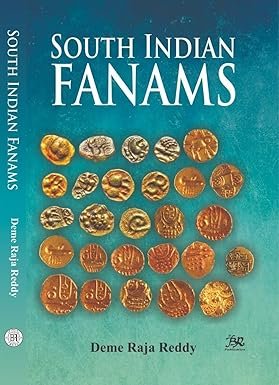
Fanams are typically South Indian and are distinct gold coins of small weight and size. Fanam is a corrupt term, and these coins should be known as Panams. References to these can be found in literary sources as well as in inscriptions. Pana's name is derived from the Sanskrit word Pana, which refers to an ancient Indian unit of weight. Panam became fanam. According to Portuguese travellers, this was the only currency in South India towards the end of the 15th century. There were more than 50 kinds of fanams current in South India at that time. Fanams must have been in circulation in the Deccan for a very long time. Fanams usually weigh a tenth of the standard gold coins of the medieval dynasties known as gadyanas, and fractions of fanams are also known. They do not have legends, and hence their correct identification is not specific, and this monograph helps in identifying them. Fanams were issued by a large number of rulers from South India, under various names, including Vira Raya fanam, Ganga fanam, Ikkeri fanam, Kali fanam, Kantirava fanam, Getty fanam, etc. Since fanams were popular, they were also issued by subsequent Muslim rulers. Ultimately, the issue of fanams ceased in the early nineteenth century when the British introduced a single monetary system comprising the rupee, anna, and paise in 1835. This book describes the various types of fanams that were current in South India in the past.
